Showing posts with label child led. Show all posts

Monday, June 22, 2020

Summer Fun Mini Themes: Star Wars Jedi Training Camp

One of my favorite things about these [many] days at home is our ability to follow the kids' interests on a whim and dig deeper. It's kind of like emergent curriculum for play. And that's why last week, the Sprout Scouts took off on an intergalactic adventure and enlisted in Star Wars Jedi Training Camp! The experience was out of this world...

S in particular is very into Star Wars. It shows up in his play quite a bit and I loved the challenge of creating a play theme out of that interest. When I happened across some amazing (and free) printable Star Wars art and activities from Fiddlesticks Education, I decided to run--er, fly with it! I was introduced to Fiddlesticks Education resources through a large nature based summer curriculum bundle I purchased on my own whim (and on major discount). I love planning, curating and creating materials for play and learning but I also love the ease of "one stop shopping" and the ability to skip some of that time consuming searching--especially now! I also love to be able to support fellow like-minded educators. Her watercolor work is absolutely stunning and I was particularly inspired by her Curious Kids Club to create a way the kids can keep track of their summer activities and accomplishments. Everyone was very excited last Friday to earn two of their first "trophies" in their Curiosity Cabinets--one for their study in robotics and another for their successful completion of Jedi Training Camp!


So, what exactly did we do at Jedi Training Camp? Well, we started off the week by adopting an Ewok! The boys each got to color, cut and paste their own little paper doll to play with and care for. There is something so fun and quaint about paper dolls. I have such nostalgia whenever we use or make them and the graphics I collected printed onto cardstock were just perfect for that.

S and Y were each presented with their own Intergalactic Passports. They used watercolors to decorate the cover and I told them each day we would visit three planets for activities. Their mission each day was to find the 3 planet pictures I had sneakily tagged around the house and yard and to glue the corresponding picture into their passports. Finding the planets became a favorite activity in and of itself!

Of course the boys needed light sabers to train with. I created those with sculpting balloons, recycled toilet paper tubes and plenty of duct tape. As you can imagine, there were many replacement balloons throughout the week! S even asked for a double sided light saber like Darth Maul at one point, so why the heck not?


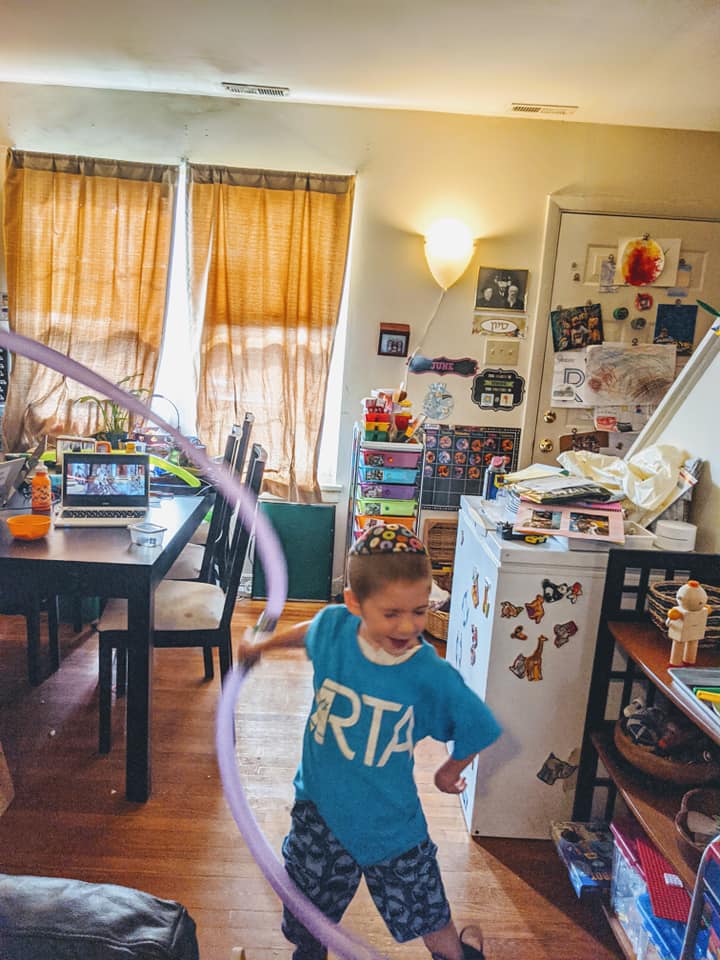
As you can see, S took his light saber Jedi training very seriously. One of our favorite (and most often repeated) activities last week was Jedi Training Light Saber Yoga. We used cards from Fiddlesticks Education and I highly recommend them, but you can just as easily make up your own moves and routines. The boys and I took turns pulling 3 cards from the deck at a time and holding each pose for about 10 seconds.


As you can see, this was really just a fun and playful mini theme. I think it made S feel particularly honored to see his interest taken into action last week. And the fun is continuing this week. We haven't quite returned to Earth yet, but we are back in our own galaxy as the Sprout Scouts enroll in Space Camp! But that's a post for another day--and until then...

Happy Playing!
Image may contain: indoor

Friday, March 13, 2020

Perhaps They Will Play?

Schools have shut down. Local facilities and places of worship are closed. Businesses and companies are preparing for remote working, shut downs, and implementing support for extended or unlimited sick leave. Grocery stores are packed with people and emptied of toilet paper, soap, hand sanitizer, kombucha. Kombucha? Really people? So I checked on Amazon. Nope. No toilet paper. But--fear not, I also checked several versions of OTC birth control methods and it seems that at least for the time being, those are still in stock--let's see what happens by the time we all have at least the next two weeks, if not longer, home with our kids. But in all seriousness, there are many and mixed emotions about this and none of them are wrong. But one of the questions that has come up again and again between parents, educators, schools and learning institutions is this: what will our children do?

There have been a variety of answers from around the globe but here's mine, right here from my couch: Perhaps they will play.

Yes, in the face of a novel coronavirus, I see the demise of play being only a novelty. Yes, the lines at grocery stores, drug stores and big box stores and ACMoore are out the door, but you know who gets to move to the front of the line? Play. Maybe, just maybe, if there is a silver lining to all of this it is that for the first time in a long time, or maybe even ever, people will play. Not just children, but grown ups, too! Without the hours filled by structured activity and scheduled routines, perhaps we will play.

And it may look and feel a little funny at first. We might be a little rusty. For some, this will be a whole new horizon. But somewhere, deep inside us all, is an inherent need, desire and knowledge of how to play. Yes, there is work to be done. Yes, our children need to learn. Yes, play is enough for now. So will I be setting up shop to homeschool my kids? Not quite. Will I be setting up activities to inspire my kids? Probably--but only because that is how *I* play. And will every moment be filled with plans and structure and sunshine and rainbows? Nope. Honestly, there are going to be moments here that are a total &#$* show because there always are! I just can't catch them on camera because I'm too busy flailing my arms and yelling in a loud, booming voice... But in between those less than Instagram worthy moments will be unstructured, unplanned, uninterrupted play.

And it won't look "perfect." There will be boredom and from that will come critical thinking and problem solving and creativity. There will be arguing and from that will come conflict resolution and relationship and connection. There will be messes. So many messes. And cleaning. So much cleaning. And scientific discoveries and experiments and concoctions and explosions. There will be glitter. There will be tears. There will be playdough and colors mixed beyond recognition. There will be laughter to the point of tears to the point of remembering that after 3 pregnancies, laughter to the point of tears is risky business during a toilet paper shortage. There will be trips to the park. There will be rainy days we put on our rain suits and rubber boots, grab our umbrellas and get outside anyway. We will see the best in others. We will see the worst in others. Fear does that. We will also see the best and worst in ourselves. Like I said, fear does that. There will be questions. So many questions. There will be talking. So much talking. There will be hopes and wishes and disappointments and frustrations and surprises and wonders and curiosities.

So lean into this play. Let it be the first time in a long time that you do. Let it be OK to not fill the moments or the minutes or the hours. Let it be OK to play a bit yourself. Let it be OK to fall apart like a giant block tower being knocked down. And get up again. Rebuild. Regroup. Remember. Remember what it's like to play for the sake of play. Not for "learning" or for "purpose" or for "product." Those things happen anyway, trust me! So dive into this. Lose track of time. Immerse in the deep waters of Pretend and Make Believe--whether you're revisiting an old and sacred space or entering this world for the very first time. You can dip your big toe in and then another and then your foot, your ankle, your leg. Or you can grab your legs at the knees and do a cannonball off the high dive. There's no wrong way to play. Be silly. Be dramatic. Be someone else. Be something else. Be joyful. Be authentic. Be speedy. Be still. Be gigantic. Be tiny. Be invisible. Be invincible.

I wonder what will come to mind in 20 years when we look back on this time? I wonder what will come to our children's minds in 20 years when they look back on this time? I wonder if this had happened sooner if ACMoore stores might have stayed in business with all the shoppers stocking up on emergency craft reserves? If you need ideas for play activities, you know I've got your back here. But also know that you don't need ideas for play activities. The definition of play in and of itself negates the whole "activity" end of it. Play is chosen. Play is natural and happens in its own space and time frame. Sometimes it moves with great velocity and zeal. Sometimes it looks a bit slower, more withdrawn, even sedentary. Move with it. Sit with it. Watch it and be in awe of it. This is the moment play has been waiting for. And since we're all home to stay, let them play, let them play, let them play!


Be well, be safe, just be! And as always...

Happy Playing!


Thursday, February 27, 2020

The Power of Conversation in Classrooms: A Lost and Dying Art


Language is power. We know from the moment a child is born and even before then, while still in the womb, that spoken language is immensely important for physical, cognitive and emotional development. Very few milestones are as exciting for parents of infants as those very first words. And language is a tool we value throughout life--as children grow from communicating through representative sounds and then words eventually toward reading and writing. We care so deeply about language that we devote entire areas of education toward teaching what words mean, how to spell them, how to say them, to perform them, to collect them in prose and poetry and even in arithmetic and science. But if we value language so very much for even our youngest of children, why is there very little room--if any at all--for the lost and dying art of conversation in our classrooms?

I have a friend who is currently studying language development, a topic I love to learn about and discuss. As we were talking yesterday, we were discussing language nuances that children pick up and repeat. Some of these are cute and some are quirky and sometimes, you hear yourself in a whole new light--a light that is not always flattering. I recalled a time in my earlier teaching days when a mother relayed a story she found cute about how her 4 year old son was playing with his blueberries at the breakfast table. There were several student blueberries and one teacher blueberry (that would be me in a bluish shade) and as they ran through the songs and rhymes of the morning routine, Teacher Blueberry stopped to say "and we don't interrupt!" Color me a little more red at this point.

One of the most frequent questions I am asked by fellow educators in regard to classroom management is how to handle "interruptions." It's several versions of the same story. "I'm reading a book to the children and I'll stop to ask a question about it but then the conversation goes on and on and on and no one is listening to the story." "I'm running my circle time and little Johnny raises his hand to tell me about a boo boo he got playing basketball last night after dinner and I lose the whole group. Now they're all talking about getting boo boos and going to the doctor and I still have to finish Calendar Time." "Little Mindy and Rochelle love to sit together at Morning Meeting but they talk nonstop! I end up having to move their seats away." And then, Teacher Blueberry who Used to Instruct that We Don't Interrupt asks the tough question: who's interrupting whom?

We value language. We value literacy. We value learning. But only when it comes from us (the adults). We want the children to listen to the story without interrupting, but every other page, we're interrupting the story to ask "what do you think will happen next?" or "did you notice what Hedgie is doing over in the corner of this page?" We have to sing about the days of the week so the children will learn about the concept of time and the difference between yesterday, today and tomorrow but we have no time to discuss something that happened yesterday. And does Tuesday mean anything to a 4 year old? Not necessarily and it may be totally out of their frame of reference. But playing basketball after dinner and getting a boo boo is totally within their frame of reference and experience. It may have even happened on a Tuesday. We want the children to "use their words" and share with each other so they develop pro-social behaviors, but just not at Morning Meeting.

And even after Teacher Blueberry here stopped interrupting the children to tell them to not interrupt, I still thought I was being incredibly benevolent when I would "honor" the child interrupting a gathering time to share a personal anecdote by saying "I want to hear what you have to say. Hold it in your head and tell me about it at lunch/snack/outside on the playground." Yes, I made the time and stuck to my word to share in that conversation later, but it had no place and no value at my Morning Meeting or Circle Time. After all, I had scoured Pinterest boards for this activity and by golly, we were going to do it!

But once in a while, in fact, quite by accident usually, I'd get it right. Like the one time in my days of teaching in an inclusive preschool program when the special education program was off for a day and the general education students were still in school. I had my teacher crate of Calendar Time activities and a Pinterest Plan for afterward. We had a small group, so I felt I could move at a slower pace. My Attendance Helper was up and we were sorting name tags into piles of Here and Not Here. When we got to one name, he said "Not here. And I'm glad he's not here because he hits me!" Another student chimed in, "and he stepped on my foot!" And another, "yesterday So and So pushed me and I was so mad!" And I stopped the rote monotony of Calendar Time that day because our time was better spent talking about keeping our bodies safe and how to ask for help. It was a tough lesson to swallow for me as a teacher knowing full well that this classroom was a place where some of the children (and even some of the teachers) often felt unsafe. But it was a lesson I swallowed along with my pride, nonetheless. And I will tell you with full confidence that my classroom completely changed that day. Not just because the number 17 never got put on the calendar...

Conversation, many say, is a lost and dying art. We live in an era where I can talk to someone I've never met in a country halfway around the world in real time, but do I know how to carry on a meaningful discussion with my neighbor? Actually, I've never even made eye contact with one of my neighbors... I tell my children how important it is that they use their words with me so I can help them but then I'm busy responding to a message on my phone, they need to wait...

I am an educator like many others who valued the theory of child-led emergent curriculum so long as I dictated how and when and where it emerged. And as I began to reach the early stages of understanding my own hypocrisy, I realized I needed to make a place and a space in my classroom for conversations to happen if this art were to be learned at all. It just so happened that when we would teach letters in my previous place of employment, per their curriculum, the hard pronunciation of the letter C came first in the school year. I decided I would introduce the word "conversation" and I also decided that in order to make a place and space for this in my room, we needed a physical place and space. And thus, the Conversation Corner was born. Two rocking chairs and a table. It began with an object set in the middle that I would choose, a conversation starter, so to speak. I introduced it to each student individually, with me, sharing the new, big word: conversation. I explained as an exchange between two people where one is the talker and one is the listener, but those roles switch again and again and again. You share ideas, you might share objects, you learn and you wonder. You ask questions and give answers. And out of conversation would come another long and beautiful Hard Letter C Word: Connection.
It began as something I "directed" per the curriculum, but it ended being the place where the curriculum emerged. It transitioned and transformed along with the children. The conversation starter in the middle of the table would sometimes be an item brought from home or something carried over from another area. At times, children asked to bring additional chairs. Sometimes the Conversation Corner was a place for practicing a knock knock joke or playing a game. It was a place where children talked about losing a first tooth or going to kindergarten registration or a beloved pet dying. There were giggles and whispers and cackles and fart noises. There were arguments and feelings that were hurt and tears. There were memories shared and memories created. One day, there was a jar of stick puppets and two girls sat down together. They began to use the puppets to act out quarrels between friends--the classic (and then current) playground politics of "you're not my friend anymore!" These puppets stayed at the table for weeks as children took turns sitting in pairs--not always the same pairs--and role playing these scenes again and again and again.
I've seen most of these children continue to grow over the last several years and they are still some of the most close knit and caring friends to one another I've ever known. A great deal of that is the role their parents play and their teachers and the community connection at large. But I like to think a small part of that is due to the power of conversation.

So what if we made a place and a space for that conversation? What if we genuinely honored and respected the children in our classrooms enough to see that conversation happening is not an interruption to the lesson: it is the lesson. From the time it is in the womb, a fetus can begin to recognize familiar voices. Those first words are pivotal and even the first time they say "no" is positively adorable. Until we want them to sit down and shut up. We argued over which they would say first, "Mommy" or "Daddy," and then we wish they'd just for once call the other parent over and over and over again. We love their curiosity until around the age of 4 or 5 when they incessantly ask "but why?" And for all the time we spent waiting and wishing and hoping for them to talk, we begin to "shh" them and finish their sentences for them and eventually restrict them from blog length to Facebook post to 140 characters or less on Twitter to maybe a hashtag if we're not too busy to hear it. Better yet, just pose for a photo and we'll add a caption later...

It's an area I would still say I am growing in. I taught my students the art of a conversation, but I still struggle personally with the Listener Role and sometimes--a lot of the time-- I do interrupt. I want to fill my classrooms and my home and my hours with the best most important and valuable things in the world--when I could let go of those Pinterest plans altogether and simply grab two rocking chairs and a table instead. The power of conversation in our classrooms, in our homes, in the car, on the bus, at the table, in the woods, on the subway, in the library, at the park, in the grocery store--is connection. It is the tiniest of exchanges between me and a Walmart cashier that makes me feel human again when I leave the house without kids for the first time after giving birth. It is the simplest offering of "I think you're doing a great job!" that gives that cashier the strength to stand the final hour of her shift after being berated by an irate customer ahead of you. It is the anger still being held from an unfinished argument in the morning with his girlfriend who just wasn't listening that made the customer irate in the first place.

Conversation is connection. We live in a world of technology that strives to keep us connected 24/7 wherever we go. Can you hear me now? But the feeling of disconnect and discontent is wider than ever. With more and more information at our fingertips, we know and feel sure of less and less. Two rocking chairs and a table. Set aside the smart phone and the laptop and the educational apps and the tablets. Two rocking chairs and a table and the art of conversation as something shared by two people who take turns being talkers and listeners again and again and again.

Happy Playing!

Friday, February 14, 2020

Infant Play & Discovery Baskets in the Sitting Stage

The world of infant play is so full of wonder, curiosity and discovery. Sometimes, when we think of "playing" we instantly visualize older children and this incredible and important stage of play development can be kind of left in the dust. When S was an infant, we honestly had very few actual "toys." I was still teaching and away from home for half the day, I didn't yet drive, and we were a young family on a tight budget. Much of what he played with were household objects or toys I made and stashed in discovery baskets for him to explore.

When Y came along, the playroom had expanded in more ways than one. Interestingly, I was so focused in those early months on S and his play needs, that many times, I almost forgot about little Y and his play needs. Discovery baskets often came to the rescue again! Y, however, had the benefit of not only seeing what the adults around the house did all day, but also seeing what his older brother did all day. He was eager to explore every bit of it.

C is totally enthralled with her brothers. She has always been happiest when they are around and is still most pleased if she is playing alongside them. With multiple children of multiple ages, it can feel like a struggle to set up play spaces that meet everyone's interests and needs. In addition, safety is also something to consider with children who are in the early stages of mobility or mouthing toys or exploring the schema of trajectory... How do you make it work?

In those very early months, before infants are even sitting up, they spend a good amount of time on their backs and tummies, visually exploring objects and tracking them, perhaps entering the earlier stages of grasping things. Open spaces and opportunities are vital and really encourage those next steps of gross and fine motor development while also stimulating the brain for cognitive growth. The sitting stage for all three of my little ones has been later than their typically developing peers. Most infants begin to be able to support themselves in a seated position around the age of 6 months, give or take. With three children now who have low muscle tone, that has been the first point at which they display a delay and we are very grateful for the assistance of our favorite physical therapist through our county's Early Intervention program. And even though the road to mobility is a slightly longer and more challenging one for my kids, the point at which they can sit independently is always a point at which I let out a sigh of relief! They are so much happier and more engaged once they reach this milestone. C in particular is so very eager to join in with her brothers at play and being able to sit and explore has also brought on a plethora of other developmental milestones including language, passing toys from hand to hand, picking things up with a pincer grasp, clanking objects together or against a surface, crossing the mid-line and so much more.

One of her very favorite things is searching through her discovery baskets. I always keep at least one bowl or basket of items more specifically geared toward her. It's OK for the boys to play with these things as well (and they do). I also keep things for her to safely explore and play with along with their toys and play setups. In this sitting stage, play for babies is a full body experience. They are mouthing things, watching things, touching things, listening to things, smelling things... I like for the items I put in discovery baskets to appeal to as many of the senses as possible, including texture, color, sound, scent, different shapes and sizes, different materials and things that are both nature and man made. I am not a rigid person when it comes to what constitutes a "toy." I am more interested in what is done with it. So sometimes my children play with "traditional toys" and sometimes they play with authentic objects.

C is very interested these days in "cooking." She is learning to love eating different foods. She is thrilled if she is playing with pots, pans, spoons and bowls. She sees her brothers play in their kitchen set and her parents in the actual kitchen and she wants to join in! In this discovery basket, I set her up with some authentic silver toned bowls, metal spoons in different sizes, tea set dishes, wooden coasters, wooden bowls in different sizes, a honey dipper, a painted wooden tea cup and saucer, some wooden mixing utensils, a couple of spice jars with flower petals and cinnamon sticks for scent and sound when shaken*, and a cloth napkin for a softer texture.
*You may have noticed that the spice jars here are glass. They are a very hard and sturdy glass, however, if your little one is in the stage of exploring trajectory or banging objects together with great force, it may not be a good time to use these. You may prefer to use a plastic version instead! 

I think every baby needs a GIANT bowl. I
especially love the mirror quality of this
metal bowl C is using to explore flour and
kitchen tools and utensils.
When I am setting up discovery baskets, I keep in mind that sometimes the basket itself is just as interesting! I try to offer a variety of sizes and styles of container. Baskets that are wide, some that are tall and narrow, bowls made from wood, some made from metal, containers with and without handles, and so forth. I've found that so many adults have a tendency to take the "basket" away when children begin to play with it because "that's not the thing they're supposed to be playing with," but I actually really like to remember that this is a child-led experience and if they are playing with it, that is what they are supposed to be playing with.

There are some things I do keep in mind when setting up a discovery basket:


  • Safety first: The mouthing stage often coincides with the sitting stage. To make sure that nothing within baby's reach is a choking hazard, you may want to purchase a choke-tube or test objects in question through a toilet paper tube. If the object fits through, it is too small.
    For those times we can join in and even for those
    times we cannot, pots and pans are always a big hit!
  • I also think it is important to join in when baby is first meeting the objects in a new discovery basket. You'll want to see how she plays, identify anything that may be a safety risk, and get to know what interests her and how. This will also help you to navigate what to add in, swap out and build dialogue around the experience for language development. I would suggest making sure you introduce a new discovery basket or play set up when you have the time to get down on the floor and play together. 
    On this afternoon, the boys and I were at the table
    making yarn bowls. C is a bit young for the glue end of
    the activity, but she is enjoying exploring the textures
    and colors of the yarn as we worked alongside her.
  • On the other end of that spectrum, for those times you don't have an opportunity to join in, like when you're getting household tasks done, there are some go-to options that are quick, easy and safe to help you along. In the kitchen, pots and pans and metal spoons are great for baby play. In the laundry room, some clean rags or towels can be fun to explore. And even many times when you are doing activities with older children, there are parts of the activity that can be explored by the youngest set of hands.
  • When possible, allow for play to happen in unenclosed open spaces. There are for sure times that baby needs to be in a high chair or a stroller or worn/carried, a car seat, etc. And these times do not have to be devoid of all play. Nonetheless, those opportunities for open space are so wonderful even before the mobile stage. Within open spaces, baby has room to move and roll and eventually begin getting himself from place to place. This is also possible outdoors! Remember--babies are also washable. They can go in the grass and in the dirt and in the sand. You can also bring out a blanket or mat. Mouthing things happens outside just as it does inside, so be prepared for baby to explore grass and dirt and sand and make sure you are there for support and supervision as needed.


Outdoor play with a modified "mud kitchen"

Exploring the sandbox at our botanical garden center...
  • Sometimes we automatically go to a place in our heads that babies play with different things than older children, that they need separate spaces, separate toys and separate experiences. Sometimes that is true and other times, they can share the same spaces, some of the same toys and modified experiences. 
    C's brothers are playing at the sensory table with flour and kitchen tools. She is playing alongside them with a giant bowl of flour and some kitchen tools of her own. Later, her brothers each take turns joining her with the giant bowl!
C loves babies! Here she is washing one of
our baby dolls with soapy, warm water. She has
a little wash cloth to work with and a cozy blanket
to wrap baby in alongside for when bath time
is done and baby is ready to dry off.
  • We know how important sensory and messy play is for children, however we often leave our littlest explorers out of this. It's true that messy play and sensory exploration is different with infants and very young toddlers. We need to consider the potential for mouthing and tasting materials. We also need to accommodate for the fact that at this stage they are not yet tall enough if they are standing to reach many sensory tables. We tend to compensate by offering sealed versions of the real deal--like sensory bottles and squish bags, and these are great as well. There are ways for the littlest players to still dig in and get messy for sensory play! Of course, you'll need adequate support and supervision. You can place a sensory bin or large bowl on the ground with sitters for them to explore water play, dried oats, pasta, beans, flour, and more. Again, know your little one and the play schemas being explored. That makes a huge difference when it comes to what is safe and practical to put in the bin!
  • Besides space, consider pace. As a huge advocate for open-ended, child led play experiences, I often say that the most important thing you can provide in a play space is time. Resist the urge to rush baby's play and to direct it. Resist the urge (even if just for a short moment) to narrate the experience from your end:(i.e.: Let's wash the baby? This is a spoon, let's mix!") Perhaps try narrating it from their end: (That makes such an interesting sound when you tap it on the table, do you hear that?) If baby wants to spend ten minutes exploring one wooden peg doll, great! If baby wants to pick up and put down 20 different objects in ten minutes, also great! Adequate time and observation will also tell you how much and what to put in discovery baskets or play setups.
  • Parallel play opportunities are the earliest forms of socialization for infants. I really struggled with this when Y was an infant and S was busy at play. It was so easy to just focus on my mobile player and just hold or carry or wear my yet-to-be-mobile player. In fact, the yet-to-be-mobile parallel play stage is honestly the easiest one you will have. Grasp it. Cling to it. Savor it. Soon, baby will be on the go, toppling towers, disturbing dinosaurs and causing chaos.
A beautiful playscape of parallel play! Same space,
same materials, three unique play experiences.
  • Shared space and shared materials can pose a challenge for multi-aged players, particularly if siblings are involved. One thing I have navigated with both of the younger two is how to respond when an older sibling wants the exact object the baby is holding. So here's the deal: there's no right answer. Early on, there's rarely a reaction from the baby when a toy is taken away and in that sense, it can be easier to allow for it and avoid the reaction from the very vocal toddler at hand. I am, however, going to remind you that at some point, the baby will develop an opinion and vocalize it in one way or another. To help everyone prepare for this next social stage, I often provide the language around the exchange for both parties involved and to the toddler, I often ask to pick something that can be given to the baby to play with. Know that this is normal. Know that it is an assertion of control and ownership and a desire for connection on the older child's part as much as it is a desire for a particular toy and sometimes even more than a desire for a particular toy (like when C has only one magnatile in her hand out of 978 of them and Y just neeeds to have it).
  • Equity versus equality is always something I keep in mind. Play looks different at every age and stage and for every child within that age and stage. Equality means that everyone gets the same thing regardless of what he/she needs. Equity occurs when everyone gets the same opportunity to have their individualized needs met. Be on the lookout for play! See it when it is happening, even if it looks different than what you imagine it should. Play serves a purpose. I try to find a way to get to yes when I can--the day is already so full of "no's." In these early stages of infant play, I feel that I learn as much about play from C as she does from engaging in it! Play is different for her than it is for Y or S, but infancy does not need to be a stage of only watching the rest of the world at play. She can--and does--join in the fun!
Happy Playing!

Tuesday, January 28, 2020

Troubleshooting Tuesday: HELP! The kids aren't playing!

I've heard it from teachers. From parents. From my own lips. "Help! The kids aren't playing!" What do we do when we've "set up shop," we have all the "right things," but the children don't seem engaged? Today I'm going to take you through some of my own favorite troubleshooting steps--and you might find some of them a bit surprising...

But before I begin, I want to unpack this term "play." What is play? I like the work of Dr. Peter Gray when it comes to defining and exploring the concept of play both for children and adults. Here is a brief synopsis of 5 points he uses to define play and you can read more on that here:


  1. Play is self-chosen and self-directed.
  2. Play is activity in which means are more valued than ends.
  3. Play has structure, or rules, which are not dictated by physical necessity but emanate from the minds of the players.
  4. Play is imaginative, non-literal, mentally removed in some way from “real” or “serious” life.
  5. Play involves an active, alert, but non-stressed frame of mind.
So when I get that nagging feeling in my gut that my kids or my students are not playing--I begin with that first point and this first step:

Finish the sentence. "The kids are not playing____" and? When I challenge myself to finish the sentence, it helps me to direct my attention toward a solution (if needed) or toward a better understanding of what is really going on. In particular, sometimes I have found that my perception of the children not playing is tainted by my perception of what their playing should look like. 
More and more, our early childhood venues are recognizing and reclaiming the importance of play in childhood. However, driven both by the external pressures of the "schoolification" of early childhood and the self-imposed pressures of Pinterest perfect play scenes, we sometimes miss the mark when it comes to truly nurturing and fostering an environment for play. 

If play is "self-chosen" and "self-directed," we need to recognize that even "playful activities" inspired for learning through play are still adult-directed. We also need to recognize that in our daycare and classroom settings--and even in our homes--parameters around play such as time limits, space limits, occupancy limits, limits on how materials are used, where they are used, when they are used, etc., are all externally chosen and directed. That said, this is not necessarily a bad thing! There are reasons those limits are set in some instances--safety, necessity of schedule, environmental factors and so on. And other times, perhaps we could increase our own flexibility.

"Wait!" you are saying... "but I do have a classroom/home that is full of play opportunities! Even my learning centers are play based!" So, yes, we do have a lot of play based activities in our homes and classrooms. However, once we begin to filter these experiences by where they should happen (dramatic play area, block area, library, art center, sensory table) or how long children may or must remain at an activity (sometimes even with timers!) and when they must be done or finished ("hey, it's time to go outside now" or even, "you're not done yet, you haven't filled the page!")...yeah, we kind of lost the child-chosen and child-directed aspect of play. 

In finishing that sentence, "the kids are not playing____," here are some of the most frequent versions I or others have experienced:

"The kids are not playing the way I expected them to." I set up a dramatic play scene for a vet shop, but the kids want to give me a check up. I put out paint and brushes, but the children are using their fingers. I envisioned they would use these loose parts to design a tree but they are building a house. The baby dolls are for the home living area but the children are bringing them to the block area. In these instances, it is usually easy for me to recognize in finishing that sentence that I, the adult, had expectations that were different from the children in my care. And then comes the part about choice. If choice is an inherent factor in true play, can I find a way to allow for choice? And the choice is also yours. Remember that it is not the end of the world if you have to set limits and parameters at times either out of necessity or even comfort. I do challenge us all to safely and securely expand our comfort zones, however that does not mean ignoring our own needs in favor of meeting everyone else's.

"The kids are not playing, they are....[being destructive, being loud, being silly, throwing things, being disrespectful to the materials...]" This one is so challenging to me. Whether I've intentionally set up an activity, set out a material or it's just their own toys at home, to see children using things in ways that I perceive as destructive strikes a nerve with me every time. And then I break that sentence down to focus on that last part. What they are doing. I challenge myself to see the action without the judgment of it--so perhaps to see the throwing without the qualifying characteristic of that being destructive or disrespectful. Many times it is helpful to look at the intention behind the action. A child who is not displaying signs of strong emotions in the moment of throwing a toy may not be throwing a toy to be angry, hurtful or destructive. Even if big feelings are a motivator, they may not have the recognition developmentally of that being "disrespectful." The intent is huge here. No, we cannot let children use things in a way that is destructive and harmful to the materials, to themselves, to others or to their space. But can we meet the need in another way? Deconstruction is a common childhood play schema--the interest in and urge to take things apart and discover how they work. So is trajectory (throwing things) and seeing how they move within our space. When we familiarize ourselves with common childhood play schemas it can help filter our perceptions of what is typical, what we can do to meet our children's play needs and to let go of some of that frustration and pressure we impose on ourselves. You can read some more about common play schemas here.

"The kids are not playing long enough." We've all seen it. Kids darting from one activity to another before you can blink an eye. Or kids visiting a new activity for the first time only to flee after a few minutes and move on to something old and familiar. Consider a few things that may be happening here. On the one hand, if you wait and watch, you might notice a child return to an activity for a longer period of time. Sometimes it is not that they didn't spend long enough, it's that we didn't. It takes a decent chunk of time for most children to deeply engage in play. And within this period of time, you will notice shifts in energy, focus and attention, pace and flow. It is similar to how we function in a work task; play truly is the work of our children. And engagement with an activity or experience can look different between an adult and a child and between one child and another. And even with the same child from one time to another. Alternatively, perhaps your expectations of how much time a child should spend on an activity were unrealistic. Again here, the intent plays a role. If a child has met their play intention with something and chooses to move on out of feelings of completion, that is "long enough."

And the tendency for some children to frequently return to familiar play things or scenarios is not necessarily a bad thing either. The children who opt out of a new or exciting activity that is offered in favor of building a tower for Elsa out of Magnetiles for the 973rd time is still needing to build that tower. Perhaps they are working out the engineering and mechanical end of it, navigating structural challenges and magnetism. Perhaps they are working through the story line end of it as they build on the theme both literally and figuratively. But this doesn't mean you need to throw out the baby with the bathwater. Leave the novel activity out, let them return later if they choose and if not, feel free to reintroduce it again at another date. We tend to feel so much pressure as parents and educators to reinvent the wheel every day. To offer something new and different from the day before. And we need to remember for ourselves and for our children--repetition is the essence of learning and development at this point.

"The kids are not playing with _____." I hear this one a LOT. Whether it's related to a specific area, toy/material, or even all encompassing--as in the children are not playing with most or any of the toys offered in a space. Especially when I hear (or say) "the kids are not playing with anything and they have so many toys," I usually find my answer right in the statement itself. Too much of a good thing is possible here. Sometimes having too many things out and available feels like option overload to our little players. Sometimes taking a portion of that away opens up space both physically and mentally to engage more deeply with what is available.  Many people worry that "taking things away" will be hard for the children and it doesn't necessarily have to be. If a child (including my own) asks "where is ___" or "why is ____ not out anymore?" I simply explain I put it away for now and will bring it back another time. Sometimes kids won't even say anything at all about such a change and will rather just begin to engage in play with what is out and available. And while many say it's easier to add than take away and to keep things minimal, especially at first, I don't think it is an all or nothing scenario. It's OK to start off with a minimal approach like this; it's also OK if you didn't and need to backtrack a bit.

"The kids aren't playing all of a sudden and they were just playing so nicely!" OK, how do I say this in a nice way? Um, they stopped playing because I came over. I've done this so many times in my classrooms or my home. The kids are playing, everyone's happy, not a worry in the world. So I waltz on in with my adult two cents. Maybe I decide to suggest we count the blocks in that Duplo tower. Or maybe I comment about what they're drawing. Or maybe I ask which superheroes they're pretending to be. Either way, I was not invited. And does someone always need an invitation to join in? No, but if you are the adult in the room, an unannounced and unplanned "visit" may not feel so welcome to the young players. In fact, it can feel like an interruption or intrusion. Have you ever watched a child approach a group of kids already engaged in play? This is where I take my cues. Some children will just watch for a bit and feel their way into joining the game. Many will say, "can I play?" I learn from their approach that there is great value in watching without labeling or hijacking and asking for an invitation is a beautiful skill! And if, as the adult in the room, your kids or students are playing nicely and all is well, you're not being lazy or unproductive by not saying and doing anything at all. You're not missing an opportunity to teach math if you don't count the Duplos. They already have the idea of one-to-one correspondence when they match one bump to one hole. Not to mention geometry, spacial awareness, "some," "a lot," "more," and so on...

There is a big push today to include open ended materials and loose parts play opportunities in homes and classrooms. Sometimes this push is a wee bit militant. I love loose parts play and open ended materials. I also think "traditional" toys have their place and "single function" playthings are still fun for kids and meaningful in play. In fact, when it comes to what children play with, I don't care as much about that as I do with how they play. Anything can be an "open ended loose part" if a child chooses to use it in such a way. However, in terms of including loose parts play opportunities, I do have a few suggestions here as well.

Many teachers or parents who take the loose parts plunge will note that they put out a whole bunch of stuff but the children don't really play with it. Again, sometimes I revisit those statements to decipher whether they are indeed not playing or if perhaps their play looks differently than I anticipated. Many times, this type of playing is new to children who may be used to playing with more traditional toys. If it is a novel way to play for you as well, they may pick up on some of your energy around it.. We often want to provide a lot of options of materials to use all at once, and many times it can be more effective to offer a large quantity of fewer materials at a time so the children can really explore them more deeply.

So many times I will be asked when I'm setting out a particular collection of objects, "what are you going to do with that?" and my response will be, "put it here and watch." But sometimes I also forget that I said that and then I might suggest things the children could do or demonstrate things they could create and all of a sudden, I have totally hijacked their play experience. Especially in cases where a child might feel particularly sensitive to not being able to replicate an adult design or idea, this can be hindering. I am definitely not saying to never set out a provocation or invitation to play, to never partake in a project based art activity or to never leave a little love note of play by setting up a small world scene or setting out a dramatic play environment. Everything can have its place and merit in a playroom.

It can also be a very enlightening experience to fully step out and back and to watch what the children do given the opportunity of adequate time and space. I often refer to time as my favorite loose part! We tend to want to jump in, to rescue our children from moments of idleness or silence, to protect them against boredom or redundancy. To match the play experience to the Instagram picture that inspired us to provide it. I have talked in the past about seeing a rising theme in my classrooms of children who "don't know how to play," and when I delve a bit deeper into that concept, I feel it needs to be reworded. It is not that children today do not know how to play, it is that many of them have not had many opportunities to engage in deep, self-directed. Play that is completely of their own choosing and not at all adult directed or inspired.

So what is our role as parents, caregivers and educators? I think we also need to look at our own play deficits. How often do we engage in deep, self-directed "play?" Can you think of the last time you played? What did that look like? Certainly our adult expressions of play are different from those of a child, but the need is the same. The need for a space that is entirely of our own creation. A pace that is entirely of our direction. And a purpose that is of our choosing. And when it comes to our children?There is no perfect pedagogy, no perfect toy, no perfect design of a space to play in or perfect agenda with regard to what you do in that space. There are a lot of right ways to play! There are a lot of right ways to facilitate play. There are a lot of right ways to honor, respect and nurture play. And there are a lot of ways that play can manifest. Allow yourself to consider the full sentence the next time you find yourself in that tailspin of worry and until then...

Happy Playing!

Friday, October 18, 2019

Sukkot: "Building" on the Theme with Loose Parts

Just when you're feeling about holiday-ed out, the Jewish month of Tishrei throws in a few more, beginning with Sukkot and culminating in the grande finale of Shemini Atzeret and Simchat Torah. The whole month is like the hokey pokey! You're in Shabbos and Yom Tov [holiday] and back out to weekday and school/work mode, then back in and back out. So walking in and out of the house to get to our sukkah seems only fitting. Y described it best, perhaps, when he said "Mommy, this week is outside." He also tried to convince me this morning that I should not brush his hair because "it is Shabbos and yomtov." Touche, little man, touche!


And with the boys both busy at school creating decorations and learning about the holidays, and C still too little to do much more than pose adorably with our handmade felt lulav and esrog set, I wanted our home activities to be a little more child-led and open-ended. I also wanted something that would, eh em, maybe keep the kids a little busier while I get some cooking done... Loose parts play to the rescue! And the best part about building on the theme of, well, building, is that you can use just about anything you have on hand. Man-made objects, nature-made objects, fabric, toys, seasonal decorative craft supplies, even recyclables. You can also decide how much or how little to set out. I tend to err on the side of less is more--it is usually easier to add something in than to reign it all in when you've added too much. It also tends to work better for the children using the materials when there is not so much out because they can really hone in on what is there, how they'd like to use it and how they can creatively expand if and when they choose to.

When selecting what to use in my loose parts play-times, I tend to choose based on my own curiosity. My favorite things are those for which I cannot think of a purpose; I know the children will. This time I did have in mind the idea of building a sukkah, but I also incorporated the current season of Autumn and left the activity entirely open ended. The children could build a sukkah or anything at all. I also wanted to incorporate objects in different sizes and different textures. I started out by setting out some dollhouse tables and chairs, little dolls, some felt and Fall themed fabric swatches, small wood blocks and a wooden salad bowl filled with Fall shaped acrylic gems, tree cookies, cinnamon sticks, artificial leaves and decorative mini Indian corns and apples. Later in the week, I added in a basket of real mini gourds and pumpkins.
These have been used for stacking/building, feeding dolls and stuffed animals, playing floor hockey and creating a pumpkin patch on our living room carpet...

Fabric swatches have been made into backdrops, carpeting and even the roof or schach of a sukkah... 

Felt rectangles in coordinating colors make great backdrops or sometimes help designate a space for a structure to be built...

The dolls, chairs and tables allowed the boys to have guests come eat in a sukkah. S invited some Carebears and My Little Ponies and mini fairies and gnomes from our Nature Table to join in as well.

Smaller loose parts have been used here for everything from schach on top of the sukkah to delicacies served to guests inside of the sukkah. Y asked if he could bring some things in from our Nature Table as well and I was eager to see how he incorporated some collected natural loose parts and even our china tea set into the scene.

Our wood blocks are all second hand and collected from old Jenga sets. They are a perfect size for a smaller play space and easy to store in a basket between play sessions.

I introduced the materials simply by showing the boys that they were there. I said that I had thought about building a sukkah with them but they could be used for anything at all. S got right to work building a sukkah, but then moved on to making a road across the length of our carpet for skateboarding Carebears! He also asked to use a ruler to measure his road. Loose parts play lends itself quite nicely to STEM skills development.

Meanwhile in our art center, I added in some graph paper, some printed sukkah blueprints, and some printed blueprint/sketch templates. In our Writing Center drawers I also stocked some Fall themed paper, stickers and sight word strips (S is very interested in writing words these days). The boys kept quite busy making decorations and pictures for Sukkot as we got ready for the holiday to begin last week. Open ended activities like this help busy adults foster busy children. Don't get me wrong, we've spent a bit of time watching videos here as well! But I feel good that in between it all, the boys are having fun playing, building and creating and all the while delving into the important themes of this holiday season.

Whether you're looking for a quick way to squeeze in some entertainment and learning as we wrap up the Jewish holidays or a great Autumn themed invitation to play, here are few tips I'd recommend as you choose and set up your materials:

  • Use what you already have. Don't go shopping (unless you really want to). Objects can be found in nature, around the house, in old/broken toys and games, your recycling bin, your craft supplies,etc.
  • Portion control is hard for children (and many adults). You do not need a LOT of each material, especially if you don't have a LOT of children using them at one time. When I set out materials, I keep in mind how much clean up will be involved if they [re: when they] get all dumped out. 
  • The use of baskets, bowls or trays helps keep everything organized. That said, I try to be a little loose about organization of loose parts. If you are really set on things being individually sorted, first off--don't look in my wooden salad bowl! And secondly, you might want to minimize the number of different materials you do introduce at one time.
Want to do more?

  • Bring loose parts play into your art and writing areas by encouraging children to draw up blueprints of their ideas or record drawings and/or photos of their finished structures.
  • Add an art component and use small loose parts to have children make their own mini holiday themed props. These can then be brought back in to the loose parts building space and used in small world play. Last year the boys loved using loose parts to create their own lulavs and esrogim. S even made me an esrog bracelet--which reminds me that I'd better go find that and wear it before the holiday ends!
  • If you're feeling quite ambitious and weather/time permits, bring your baskets of loose parts outside to your actual sukkah and have a blast working and creating in the fresh air! This type of activity is a great one for spaces and groups that include members of varying ages.
  • On a larger scale, introduce and offer larger sized materials and loose parts for building a play sukkah that can actually be used by children. Cardboard boxes, old blankets/sheets and fabric, recycled tissue boxes and large cardboard tubes, toys like fort magic or cardboard brick blocks, clothes pins (for connecting) can all be used. Outdoors, large sticks and logs and branches can be incorporated.
  • Use edible loose parts for building a sukkah that is good enough to eat! You can go the sweets and treats route and use graham crackers, frosting, pretzel sticks and cereals or candies. You can also go the more nutritious route and use fruits and veggies, perhaps some peanut butter and/or humus for sticking things together.
  • For a fizzy fun Sukkot themed science experiment, try your hands at some Exploding Esrogim (our holiday themed version of this fizzy lemon volcano experiment). It was a huge hit at a community event I ran with kids of all ages (and maybe also some grownups). You'll just need some lemons (those are your esrogim), baking soda, some additional lemon juice and optional red food coloring. This one can get a bit messy, so it's a great candidate for outdoor play.


  • Check out some of our other favorite Sukkot related and Autumn related activities as well!
We are about to hokey pokey back in to Shabbos and holiday mode here, but we'll be back to routine and reality soon! Until then...
Chag Sameach, Happy Fall, and Happy Playing!


Thursday, February 22, 2018

Think Outside the Box Thursday: Woodworking with the Very Young

Nothing goes together like a three year old, some scrap wood and a hammer and nails. Wait, what?! Give a small child real tools and materials? You'd surely be asking for trouble and you may as well buy stock in Band Aid brand while you're at it... Today, however, I am here to say not only that woodworking can be done with young children, but also that it is an incredible tool for building skills in a variety of developmental areas, creativity and confidence (puns, of course, intended).

When I was a preschooler, my nursery school had a room known as The Block Room. Just as the name suggests, there were a variety of wood blocks in the room as well as a functioning woodworking area where a four year old version of me once hammered real nails into real wood making a real couch for a real pet rock. This was the beginning (and until very recently, also the end) of my woodworking career...and I still have all my fingers. In our house, the toy tool box is one of the most often revisited toys. S loves to hammer and tinker and build and fix things. If there is a household repair that needs to be done, he's first in line to help. He was enthralled when he discovered a Dollar Tree purchase gracing his tool box one day: 3 real screw drivers! Before Sukkot, I had a vision of beginning some creative woodworking with him and although we started with a bang (literally), the scrap wood and hammer have been collecting dust and taking up space in our pantry closet for months. We simply do not have the space for a wood shop in our apartment!

S's interest in building did not wane at all. Over the last few months, he's enjoyed playing with his tools, doing woodworking craft kits with his Tatty, even hammering holes in a giant cardboard box we kept for him to play with for a couple of days before it made it to the recycling. If there's something to be "fixed," he will find it; if there is nothing to be fixed, he will find that, too! And as I have been working with our outdoor space and play garden, it occurred to me that this would be the perfect new home for a woodworking station! With a collection of items we already had at home, a few small additions and a little bit of set up, we had an afternoon of child-led tinkering, creativity and fun. S is already planning another afternoon spent "working hard to build with wood" today!

What Will I Need to Create a Woodworking Station? Creating a woodworking station need not require a lot of money. You may have much of what you need already at home. The rest can be inexpensively acquired at second hand stores, discount/big box stores or even garage sales. Many hardware stores have scrap wood and materials they would be happy to donate rather than throw away. Perhaps a friend or relative has some things sitting in the attic or basement they are looking to part with. There were very few items I actually purchased just for the purpose of our woodworking station. One was the toolbox itself as I wanted something durable that could remain outdoors. That said, it is the least expensive model from Walmart! Here's a peek inside and some ideas of what you might include. Choose items that you have or can easily access, add in a few ideas of your own and keep in mind that less is more--you can have a fully functioning and exciting woodworking station with just a hammer, nails and wood!
I used a simple wooden crate to hold our scrap wood collection. We have wood in a variety of sizes and shapes. In the top section of our toolbox, I added a selection of nails in different sizes. Longer nails and nails with a wider head (like roofing tacks) are easier for beginning woodworkers to manipulate. I also have a variety of screws, nuts and bolts. Even manipulating larger nuts and bolts with their fingers is a great fine motor activity for beginning woodworkers. 
Some safety goggles are a playful and functional addition. A notepad and pencils are on the ready for recording blueprints, ideas, capturing memories or taking important notes along the way (even for pre-writers). We had a bunch of brightly colored zip ties leftover from building our sukkah this year and I thought they would make a fun loose part for S to explore.


A construction vest and work apron are a fun way to inspire dramatic play in the process. Somewhere we also have a couple of hardhats in our costume collection that could be a great addition. One of our favorite outdoor activities is "painting" with water, so I included a large paintbrush and roller for this purpose. Perhaps we will bring out some actual paints at some point to add an element of color to our work. A sandpaper block is great for beginning woodworkers to smooth rough edges. I included a collection of tools we already had multiples of at home in our toolbox. I opted for hammers and screw drivers with wide handles for easier gripping and shorter tools whenever possible. I also included an extra tape measure and level we had in our collection. 
Ok, I've got everything! Now what? Utilizing a woodworking station is a bit different than setting out to complete a specific project. It is process oriented and child-led. My role was to provide support and supervision, to give assistance as needed and to answer questions or help problem solve when issues came up. S's role was to explore and experience. He chose the materials and tools he used. He asked questions about what tools were and how to use them. If he needed help to get a nail started, I helped him. When he wanted to practice using a screw driver, we problem solved by using a larger nail to make a wide hole in the wood that would accommodate the screws we had. I ensured that he used tools and materials safely but did not jump in if he was using them in a novel way (like wanting to hammer a nail through a nut).
He sometimes needed help to start a nail into the spot he wanted, but once he got going, he was able to work independently with minimal assistance. He decided he wanted to build "a house." I encouraged him along the way with questions like "what will you add next?" or "what does this part do?" I did not worry at all if it didn't look like a house, especially if he wasn't worried about that either! 


Practicing using a screw and a screwdriver...


What are the benefits of woodworking with children? Woodworking like other handcrafts is a great way to nourish childhood creativity and curiosity. Using their hands to create meaningful work builds confidence, competence and a sense of reverence for resources and materials. Using real tools and materials shows children that their work is valued and respected. Surely, toy tools are fun and have their place as well, especially for little builders like mine who could hammer in the morning, hammer in the evening and even at suppertime...

Many teachers and parents are concerned about safety and age appropriateness when it comes to using tools with young children. What I have observed in my years of teaching and as a parent is that when children use "real materials," they inherently also recognize the value in using them carefully and appropriately. Children love to feel more grown up and using our tools nurtures this feeling. There is definitely a need for adequate supervision and support and you may wish to start with some simple activities beforehand to gauge your child's readiness for using a hammer and nails. Here are a few ideas:

  • Use a plastic hammer and golf tees in playdough, clay or floral foam or Styrofoam. Practice setting up the "nail," and hitting the head to push it in. Playdough would be the easiest of materials to work with, followed by clay that is a bit thicker and finally the foam, which would require a bit more fine motor coordination to get started.
  • Hammer and peg toys and toy tool sets are also a great way to practice the general movements associated with woodworking. You can often find these at thrift stores.
  • Nails with a wider head are easier to manipulate for little hands. Roofing tacks are great. Softer wood like balsa is a good starter base.


For sure, there is a huge fine motor component with woodworking. There is also a lot of gross motor development involved in hauling lumber, swinging the hammer, building and constructing and beyond... Here's a shot of S hauling wood to his work site. Lifting and moving large objects is such a rewarding and valuable task for young children and they are oftentimes drawn to activities that encourage this, like moving furniture, pushing strollers and shopping carts, etc.
 Language development and vocabulary associated with learning about tools and building is a literary component associated with woodworking. Writing and drawing out plans is another great component, even for pre-readers and pre-writers. The act of creating and sequencing plans is a huge part of literacy development and mathematical concepts as well. And speaking of math... This shot of S using our filling station for his mud kitchen may not have entirely to do with woodworking, but it did lead to the shot below of him "measuring" his puddle! He discovered the measuring tape in the toolbox and asked what it was for. I told him it can show how big or long or tall something is. He quickly got to measuring his wood, his shadow, the stairs, and even a puddle of water!

For sure there is a science component to woodworking and exploring force, trajectory and a variety of engineering concepts. When we talk about STEM with preschool aged children, there is often a focus on "modern" technology--but let's not forget about the technological value of tools!
Finally, woodworking involves a great deal of critical thinking, concentration and focus as well as problem solving. These are important aspects of social development at this age and stage. And even if the "product" does not resemble a functional structure, I encourage you to work with your little carpenters to create a functional way to use them!
S demonstrated number sense when he carefully counted six nails that we hammered into this tree cookie. When we came inside, I grabbed our old collection of plastic pony elastics from when he still had long hair and we created our own tiny geo-board He was super excited to make a pentagon! Later we may try out connecting multiple geo-boards with rubber bands. Perhaps we will try out some yarn or ribbon instead... 


S sat with intense focus and concentration to create "a rose" out of some colorful zip ties. He was so proud and excited by his work experience. He is eager to return to his work and having a woodworking station allows this to be an activity he can take his time with. There's no push to produce or perform. There is no agenda. When children see that we value their work and tinkering, they value it as well. This morning on the way to preschool, S told me "People do hard work." 
"Yes, that's true! Big people and little people do hard work!" I responded.

"I worked hard building with wood!" he continued.

"Hard work can be fun, can't it?" I mused, and S agreed. When I think about work ethic, I truly believe it begins with inheriting a sense of value and meaning in our work--and that begins in childhood. When adults value the work that children do through play, they intuit that it is important and meaningful. S may not grow to be a carpenter (or he may!) but I do have high hopes that he will grow to love his play and work, wherever that will lead.

Happy Playing!